
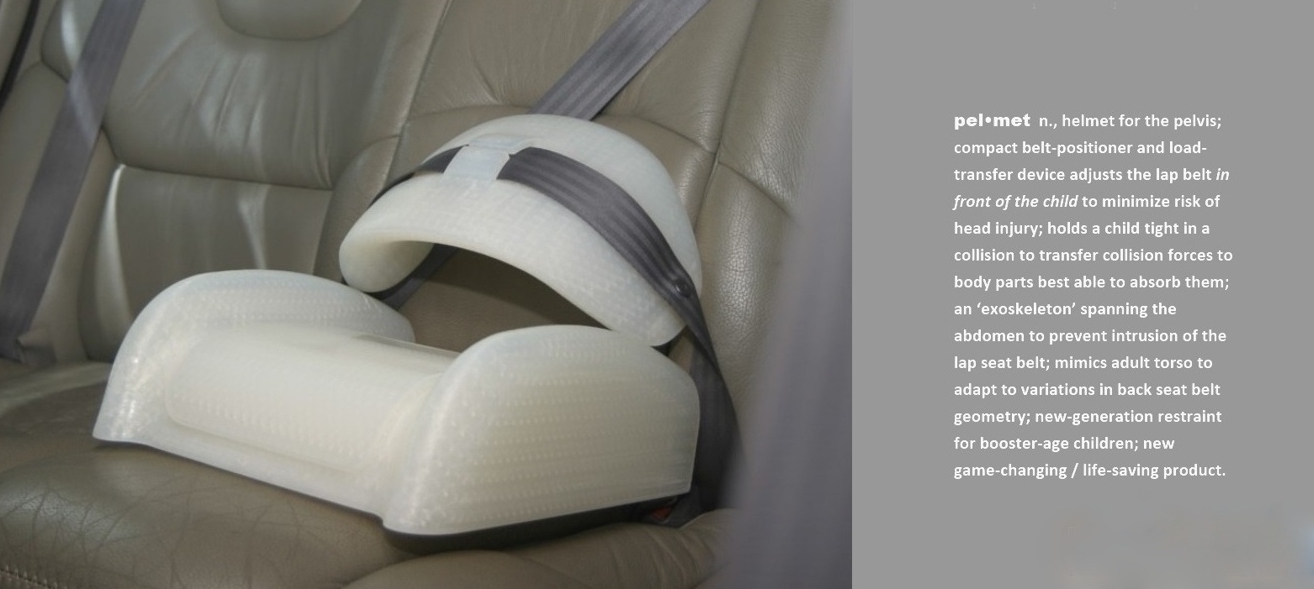
TEN WAYS the Pelmet makes the Booster Better:
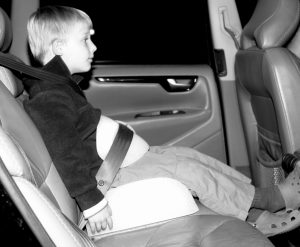
1. The Pelmet Improves Lap Belt Performance.
As a belt-positioner, the Pelmet increases the vertical angle of the lap belt to increase the downward force on the upper thighs, increasing the friction between the child and the booster to isolate the pelvis from the inertia of the legs and oppose the child’s tendency to submarine.
2. The Pelmet Reduces Risk of Head Injury.
By placing the belt-positioning feature ahead of the child instead of advancing and elevating her, the Pelmet puts the child at the least possible risk of head impact in either a frontal or side impact collision.
3. The Pelmet Optimizes the Child’s Seated Position.
The optional low rearward-sloping dedicated booster promotes proper pelvic orientation and optimal seat belt adjustment to minimize free movement in a collision and preserve belt angle; the child is thus coupled more securely to the vehicle to exploit its capacity to absorb the energy of the collision.
4. It Makes It Easier for Parents to ‘Snug’ Their Child:
The Pelmet adds its thickness to the cross-sectional area of the child to simulate the mid-section of an adult passenger: it thus brings the belts into a better alignment with collision forces, allowing them to be adjusted more snugly and increasing their efficiency.

5. The Pelmet is an ‘Exoskeleton’.
It bridges the vulnerable abdomen to concentrate collision forces on the parts of the anatomy best able to assume them – the bony hips and pelvis.
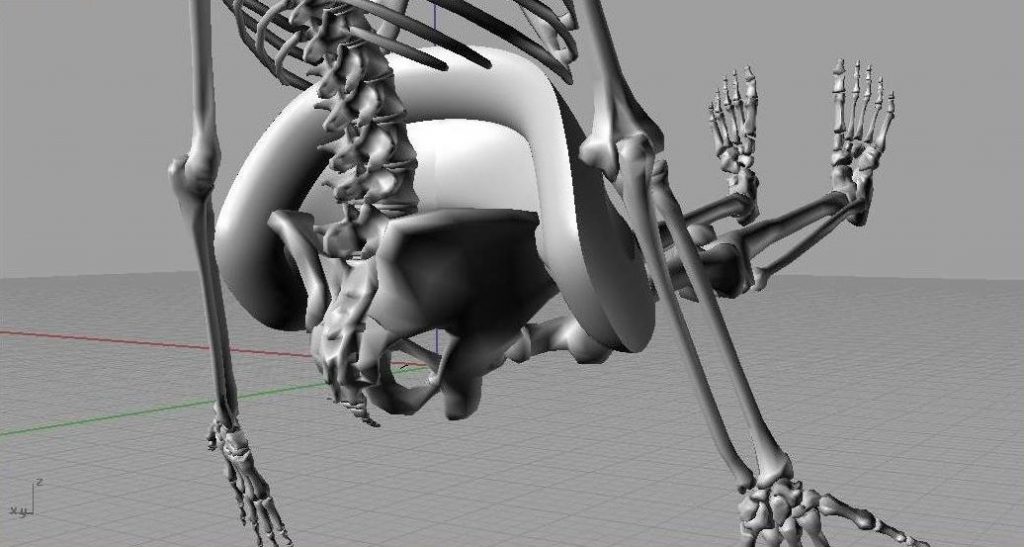
6. The Pelmet Protects against Intrusion by the Lap Seat Belt.
It reduces collision pressures by spreading collision loads over a larger area.
7. The Pelmet Reduces Shoulder Belt Forces.
It reduces the pressure exerted on the upper torso by the shoulder belt by raising the upper boundary of the lower torso restraint.
8. Instead of ‘Static Belt Fit’, a ‘Dynamic Crash Response’.
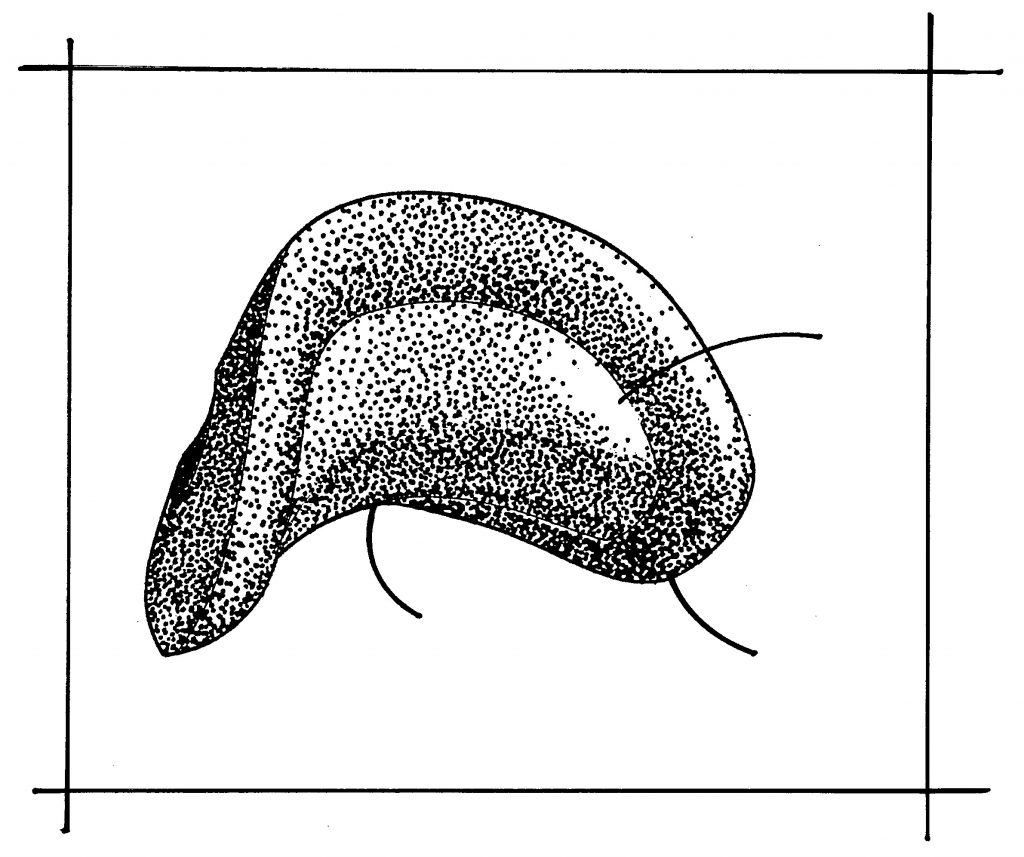
Static lap belt fit is the first casualty of any dynamic collision event; both the belt slack characteristic of belt-positioning booster seats and the compressible vehicle seat reduce belt angle to encourage the child to ‘submarine’ under her lap seat belt to incur internal injuries commonly known as ‘seat belt syndrome’.
With the Pelmet, any forward movement of the child in a collision will occasion a counter-clockwise rotation of the restraint about the point of contact of the lap belt, raising it to compensate for compression of the vehicle seat and maintain the angle of the belt to ensure the downward pressure necessary to offset the child’s tendency to submarine.
9. The Pelmet Protects the Child in Side Impacts and Off-centre Collisions.
The Pelmet will protect a child passenger in either a side or off-centre impact which would cause her to roll out of her shoulder belt to ‘jack-knife’ over the lap belt.
10. The Pelmet Makes It Easy to Choose the Right Restraint.
By simulating the lower torso of an adult passenger to achieve proper lap seat belt geometry in vehicle interiors intended for adult passengers, the Pelmet eliminates a parent’s dilemma of how to choose the booster that is right both for their child and their vehicle.
Please note: the Pelmet is shown to illustrate issues underlying the protection of booster age children in car crashes; each of the ten benefits of the Pelmet may be viewed as an implicit critique of the belt-positioning booster seat; the Pelmet is not currently available for sale; images of the Pelmet do not reflect its current state of development; the Pelmet is subject to patents pending.
The Cool Factor.

Don’t Call Her ‘Baby’.
A six year old wants nothing more than to graduate to the next level.
She’s allergic to anything she thinks is babyish.
The belt-positioning booster seat is like her little brother’s toddler seat.
The Pelmet is like her big sister’s boarder helmet.
The booster seat is old school. The Pelmet is a cool tool.